
Is a Digital Workflow Worth It? The Real ROI Math for Your Clinic
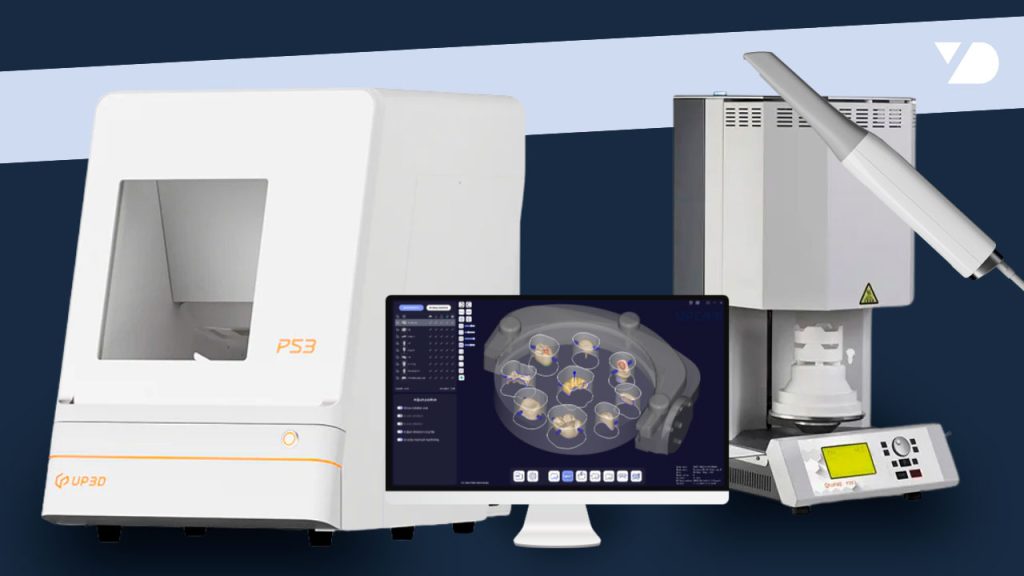
Is a digital workflow actually worth it, financially? It is one of the questions we get asked the most at Dental Tech Expert, and it deserves a real answer, not a sales pitch.
So today we are setting the operational, logistical and clinical arguments aside and looking only at the numbers: if the profit from running a digital lab is higher than what that same money would earn sitting in the bank, it is worth it. If it is not, it is not. Here is exactly how to get to that number.
The average clinic we are modeling
To make this useful, we need a realistic baseline instead of a best-case scenario:
- Volume: an average clinic produces between 40 and 60 crowns a month. We are using 50 crowns.
- Price: an average zirconia crown is priced around $1,400 to $1,500, clinic-to-patient (not lab-to-clinic).
Keep in mind every case mix and market is different. The goal here is to show you the method, so you can run it with your own numbers afterward. If you are still comparing systems, our equipment Comparator is a good place to see how different setups stack up before you commit to a volume assumption.
What a single zirconia crown actually costs to produce
Consumables: burs and zirconia
A set of three burs for zirconia and PMMA costs around $180 and mills roughly 250 crowns over its lifetime. That works out to about $0.72 per crown in burs.
Zirconia discs range widely in price, anywhere from $90 to $350. Taking an average cost of $150 per disc, and an average yield of 24 crowns per disc, zirconia costs about $6.25 per crown. If you want to see the full range of materials and brands we work with, our materials page breaks them down.
Combined, material cost per crown comes to roughly $6.97, call it $7.
Direct labor: your technician team
Every crown needs two skills: CAD/CAM design (designing and nesting the case) and finishing (staining, stacking or makeup). You can staff this in two ways, and for this model both cost the same: about $150,000 a year in total labor, or $12,500 a month. That figure is fully loaded: salary, payroll taxes, benefits and any production bonus.
- Option A – Two specialists: one CAD/CAM technician and one ceramist, at about $75,000 each. You get backup when someone is out and more room to grow volume, and each person sticks to what they do best.
- Option B – One senior all-rounder: a single technician who can design and finish at a good level, paid about $150,000. Coordination is simpler and there’s one person accountable for quality. The tradeoff is that production stops when that person is out, and they will become the bottleneck as volume grows.
At 50 crowns a month, labor comes to $250 per crown either way. Add about $7 in materials and the direct production cost is roughly $257 per crown.
Putting it all together: the monthly P&L
With a cost per crown established, here is what the operation looks like financially at 50 crowns a month:
| Line item | Calculation | Monthly amount |
|---|---|---|
| Gross revenue | 50 crowns × $1,400 | $70,000 |
| Variable costs (materials + commissions) | 50 crowns × $41.97 | −$2,100 |
| Other operating expenses | 25% of gross revenue (rent, admin, utilities, maintenance) | −$17,500 |
| Technician labor (fully loaded) | $150,000 ÷ 12 | −$12,500 |
| Net income (pre-tax) | $37,900 | |
| Estimated taxes | ~21% corporate rate (varies by state and entity type) | −$8,000 |
| Equipment financing payment | ~60-month financing on a $30,000–$35,000 system | −$800 |
| Net monthly profit | $29,100 |
These are national averages meant to illustrate the method. Your own price per crown, volume, salaries and local tax rate will change the result, sometimes significantly, so treat this as a starting template rather than a quote.
Digital workflow vs. leaving your money at the bank
Now for the real test. In this scenario, a system costs roughly $40,000. If you left that $40,000 in the stock market instead, could it generate $27,500 in profit every month? No investment does that. So on an average clinic, at average volume and average price, the math clearly favors moving to a digital workflow.
That is the rule to apply to your own return on investment decision: compare the profit your money would generate inside your clinic against what it would generate anywhere else. If the stock market wins, do not invest. If your clinic wins, and by how much matters too, it is time to move to digital. Browsing our equipment catalog is a good next step once you know your target volume and budget.
Should your clinic make the switch?
You do not need to take our word, or anyone else’s, for this. The numbers above are national averages built to show the method, not a substitute for your own case mix, your own price per crown and your own local costs. If you want this exact calculation run with your real numbers, our team is happy to help.

Talk to our team of experts
Tell us about your scenario. We’ll prepare a technical estimate and guide you to the best solution.
Fill in the fields below:
