How Much Does a Digital Dental Workflow Cost? (2026 Price Guide)
Reading time: 9 minutes · Prices as of October 2026 (Q4 promotional lineup, valid through December 31, 2026) · By Enzo, Dental Tech Expert
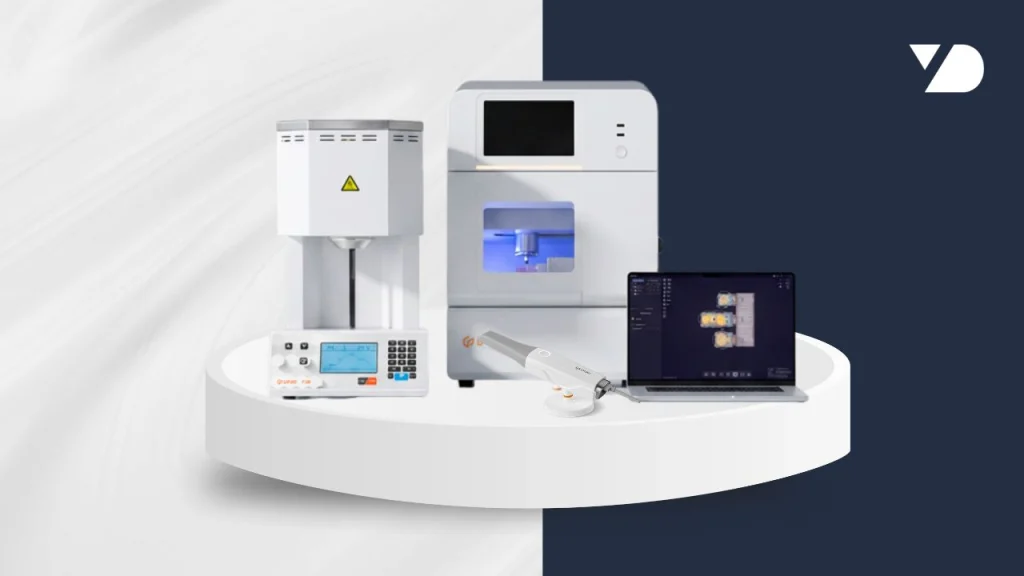
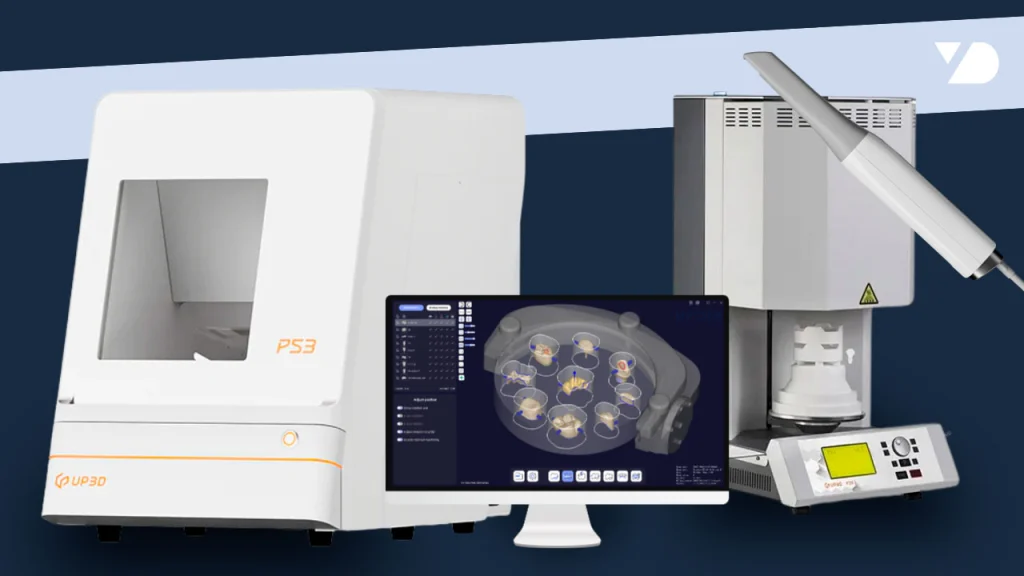
A complete in-office milling workflow (scanner, CAM software, mill and the ovens the material needs) costs $29,000 to $59,000 in our Q4 2026 lineup, depending on the materials you want to produce. If you already own an open-file scanner, the mill side alone starts at $24,000. Our entry intraoral scanner, the UP3D UP610, is $6,500; milling machines on their own run from about $20,000 for a clinic-ready 5-axis mill to well over $60,000 for lab-scale production. Financed over 60 months, a complete zirconia workflow costs about $697 a month.
Those ranges are wide because “going digital” can mean three very different setups: a scanner that sends files to your lab, a chairside system that mills same-day crowns, or a full in-house lab that produces zirconia bridges and full arches. Each one has a different price, a different skill requirement and a different payback.
This guide breaks the cost down piece by piece: scanners, mills, complete workflow packages, the recurring costs nobody quotes up front, and the math that tells you how many crowns it takes to pay the system off. Our own prices are our current list and package prices; third-party models are placed in price brackets from publicly listed prices and are there so you can compare. Final pricing is confirmed in your quote.
Planning next year’s purchase instead? See Digital Dental Workflow Cost in 2027: What to Budget and When to Buy.
What you need depends on what you want to make
Most practices buy in this order, and each step unlocks a new type of work:
- Intraoral scanner + design software. Digital impressions, smile design and final designs. All manufacturing is still outsourced to your lab.
- Add a 3D printer. Provisional crowns, provisional full arches, surgical guides, splints and models.
- Add a milling machine. Definitive restorations in zirconia, lithium disilicate (E.max) and, on some mills, metal.
The scanner always comes first. It is the entry point for every other workflow, and it pays for itself fastest by eliminating impression material, remakes and shipping.
Intraoral scanner prices in 2026
Every scanner in these brackets handles the basics well: single crowns, bridges, models and digital impressions you send to your lab. What you pay more for is speed, software, wireless freedom, specialty features like photogrammetry, and the brand.
| Price bracket | Models we sell | Other models in this bracket | What you get at this level |
|---|---|---|---|
| Under $9,000 | UP3D UP610: $6,500 | Alliedstar AS260, Panda P4 Wireless | Accurate, open-file scanning for crowns and bridges; wireless now exists at this level. The UP610 scans a full arch in under two minutes |
| $9,000–$12,000 | Shining 3D Aoralscan Elf: price on request | Medit i600 | Guided software, basic design modules. The Elf shares the hardware family of the Elite, without photogrammetry |
| $12,000–$16,000 | – | Medit i700 wired, 3Shape TRIOS Core | Faster scanning and stronger software; check aligner-platform compatibility on entry models |
| $16,000–$23,000 | Shining 3D Aoralscan Elite wired: price on request | Medit i900 Mobility, 3Shape TRIOS 3 | Premium, software-driven scanners. The Elite was the first to combine intraoral scanning and photogrammetry in one device |
| $23,000–$26,000 | Aoralscan Elite Wireless: price on request | 3Shape TRIOS 5 Wireless, Dentsply Sirona Primescan 2 | Premium brands; some carry an annual software fee; closed-ecosystem scanners make most sense inside that ecosystem |
| Above $26,000 | – | 3Shape TRIOS 6, iTero Lumina | Top-of-line hardware and brand |
Bracket placement of third-party models is based on publicly listed prices in September 2026 and can change; confirm with each manufacturer. Our prices are current list prices; Shining 3D models are quoted on request. Source for the brackets: Enzo Calgaro, Intraoral scanner prices, broken down by bracket.
Three questions that decide your bracket
- Do you do full-arch implant cases? Full arches need photogrammetry, either built in (Aoralscan Elite) or as a separate system paired with your scanner. Built-in saves a second device.
- Do you submit clear aligner cases? Check direct compatibility with the aligner platforms you use before buying; not every scanner submits directly to every platform.
- Will you design in-house? Some scanners include basic design software. That can cover you until you buy a full design license such as exocad, which we quote with the package.
Also check for annual software fees. Some brands charge yearly to keep the software active or updated. Over five years, that can add thousands to the real cost of a scanner that looked cheaper at purchase. The scanners we sell carry no annual software fee.
Dental milling machine prices in 2026
Most clinics will find the right mill between $20,000 and $60,000. Below that you are in used or block-only chairside units; above it you are buying lab-scale production and heavy metal milling. The price is driven by four things: how many axes, wet vs dry milling, how it handles compressed air, and whether it has an automatic disc changer.
| Price bracket | Mills we sell (list price) | Other mills in this bracket | Best for |
|---|---|---|---|
| Under $22,000 | – | CEREC MC XL, XTCERA XMILL 500 Plus | Chairside E.max blocks; entry 5-axis dry |
| $20,000–$30,000 | UP3D P42+: $23,000 (4-axis wet, compressor built in) · UP3D P55D: $25,000 (5-axis dry, no compressed air) | VHF E5, Ceramill Motion Air | Clinic-ready mills that install without air lines: glass ceramic on the P42+, zirconia and resins on the P55D |
| $30,000–$40,000 | UP3D P53DC: $30,000 (5-axis dry, 12-disc changer) | Other 8–12-disc changer mills | High-volume zirconia and PMMA with unattended production |
| $40,000–$50,000 | UP3D IRON CORE i5 PRO (5-axis wet and dry; sold in our All-in-One package, see below) | Ceramill Motion 2 | Hybrid mills: zirconia, PMMA, wax, glass ceramics, custom abutments; the i5 PRO adds titanium bars |
| $50,000–$60,000 | – | Ceramill Motion 3 Air, VHF S5 | One high-end hybrid, or dry production with a disc changer |
| $60,000 and above | – | imes-icore 350i Loader, VHF R5, Ceramill mills with 8-fold loaders | Lab-scale production, heavy metal milling, premium brands |
Our list prices are from our current catalog; third-party placement from publicly listed prices, September 2026. Mill price only, not the full workflow. Source for the brackets: Enzo Calgaro, Milling machine prices, broken down by bracket.
The software cost hiding inside the mill price
Every mill needs CAM (nesting) software to send the design to the machine. There are two models:
- CAM included. Many mill makers ship their own CAM with the mill. UP3D includes its base CAM at no extra cost and with no annual fee; UPCAM Advanced, for multi-mill and disc nesting, is a separate license, and it is what our packages include.
- Open CAM bought separately. Mills that run on open CAM such as Millbox or hyperDENT need their own license.
When you compare two mills, compare them with the software included. A cheaper mill plus a separate CAM license can cost more than a mill that includes its own.
Compressed air: external, built in, or none
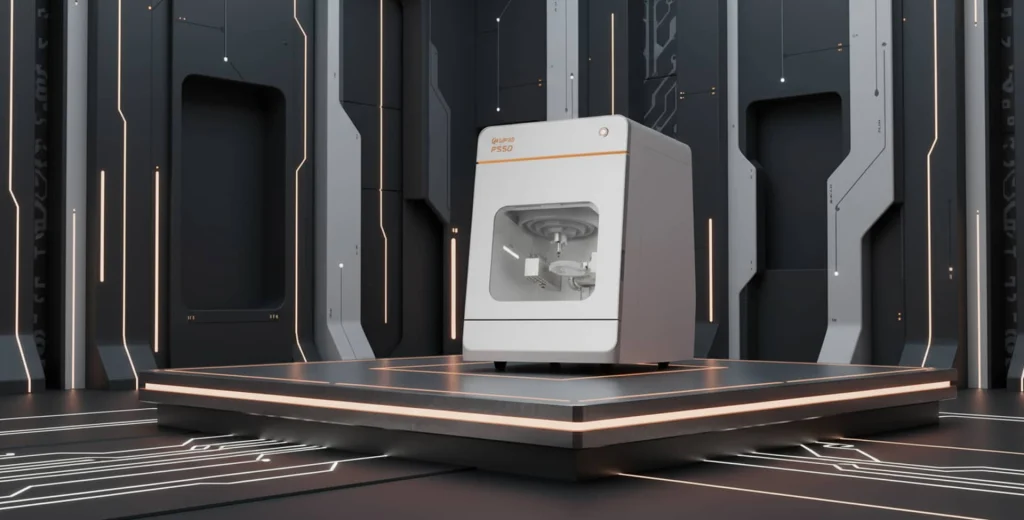
For a clinic, avoiding an external compressor is almost always worth it: no air lines, easier to move, less maintenance. There are two ways to get there. Mills with the compressor built into the housing (the UP3D P42+) and mills that need no compressed air at all (the UP3D P55D, with an electric spindle). Disc-changer mills such as the P53DC and most hybrids use an external compressor; for a dedicated lab, that matters less. Wet and dry hybrids do more materials but need more maintenance and more experience to run.
What a complete workflow costs
A mill on its own doesn’t produce a crown. You also need CAM software, and depending on the material, a sintering oven and a stain-and-glaze oven. This is where buying a matched package saves money and setup time. Here are our Q4 2026 packages; every complete workflow includes the UP610 intraoral scanner.
| Workflow | Q4 2026 price | Equipment included | Produces |
|---|---|---|---|
| Full Chairside Workflow (E.max) | $29,000 | UP610 scanner, UPCAM Advanced, P42+ mill, F30 stain & glaze oven | Same-day single crowns, veneers, inlays/onlays, up to 3-unit bridges in glass ceramic; composite resin, titanium abutments |
| Full Zirconia Workflow | $35,000 | UP610 scanner, UPCAM Advanced, P55D mill + V10 suction, F20 sintering oven, F30 oven | Single crowns through full arch and implant bridges in zirconia; PMMA, PEEK, composite resins, wax |
| Dedicated Workflow | $52,000 | UP610, UPCAM Advanced, P55D + V10, P42+, F20, F30 | Chairside speed and zirconia range at the same time, on two machines |
| All-in-One Workflow | $59,000 | UP610, UPCAM Advanced, IRON CORE i5 PRO mill, F20, F30 | Everything above plus implant frameworks and titanium bars, on one hybrid mill |
Already own an open-file scanner? The Glass Ceramic Essential ($24,000: UPCAM, P42+, and your choice of the F30 oven or a UP610) and the Zirconia Essential ($28,000: UPCAM, P55D + V10, and your choice of the F20 oven or a UP610) cover the mill side.
Q4 2026 pricing, valid through December 31, 2026. Final pricing is confirmed in your quote; see the equipment Comparator for the current side-by-side.
Chairside or zirconia: which one fits your practice
The real fork is the material, and it decides both the equipment and the team you need.
- Chairside E.max takes about 1.5 hours from scan to cementation, in one visit. It covers single units up to a 3-unit bridge. Many practices run it with an assistant doing the design and the stain and glaze, guided by AI-assisted design software.
- Zirconia mills in about 13 minutes on a 5-axis dry mill; the sintering program decides whether the crown is seated the same day (speed sintering) or the next day (best aesthetics). It goes from single crowns to full-arch and All-on-X. Full arches realistically need a technician, or outsourced design, for the design and finishing steps.
If most of your volume is single-tooth and you want same-day turnaround, start chairside. If you place implants or do any full-arch work, zirconia is the safer long-term choice. A practice that wants both can run two mills (Dedicated) or one hybrid (All-in-One).
A chairside system no longer requires six figures: a full chairside setup with scanner, software, mill and oven now comes in under $30,000.
The recurring costs nobody quotes up front
Once the equipment is installed, your main ongoing cost is material, and it is lower than most people expect. All-in cost per unit, including bur and tooling wear, at the materials we supply in October 2026:
| Material | Basis | Cost per crown (approx.) |
|---|---|---|
| Zirconia | $150 disc, about 22 crowns per disc, plus about $0.70 of bur wear | about $7.50 |
| Lithium disilicate (E.max) | $220 box of 5 blocks, plus about $1 of bur wear | about $45.00 |
The other costs to budget for:
- Burs. Already inside the per-crown figures above; we stock them at volume pricing.
- Software fees. Zero with the CAM included in our packages. Check any scanner or design software you add for annual fees.
- Maintenance. Lowest on dry-only mills without an external compressor. Wet and hybrid mills need more care.
- Labor. For chairside, your existing team can usually run it. For full-arch zirconia, plan for a technician or outsourced design.
Financing: what you pay per month
Most practices finance. Approvals are usually fast, and our partner confirms the timing and terms when you apply. Estimated monthly payment for each package, no deferral, freight not included:
| Package | Price | 36 months | 48 months | 60 months |
|---|---|---|---|---|
| Glass Ceramic Essential | $24,000 | $742 | $577 | $478 |
| Zirconia Essential | $28,000 | $866 | $673 | $558 |
| Full Chairside Workflow | $29,000 | $896 | $697 | $577 |
| Full Zirconia Workflow | $35,000 | $1,082 | $841 | $697 |
| Dedicated Workflow | $52,000 | $1,607 | $1,249 | $1,036 |
| All-in-One Workflow | $59,000 | $1,824 | $1,418 | $1,175 |
Estimates based on our current financing partner’s rates with approved credit; final terms depend on approval. A six-month deferred start is available on 24- to 60-month terms at a slightly higher payment.
Section 179. Equipment you buy and put into service can often be deducted in full in the same tax year under Section 179, instead of depreciated over several years. Limits and eligibility change, so confirm with your accountant before you count on it. This is not tax advice.
How many crowns pay the system off
The fair way to measure payback is the money you stop sending to your lab, minus what it costs to make the crown yourself. Your patient pays the same fee either way, so that fee is not the gain.
The example below uses an assumed lab fee of $180 per crown, inside the typical US range of $150–$250; replace it with your own invoices. It assumes your current team handles design and finishing, so no new hire, and it includes the scanner, because the packages do.
| Crowns per month | Zirconia: lab savings/mo | Full Zirconia ($35,000): payback | Chairside: lab savings/mo | Full Chairside ($29,000): payback |
|---|---|---|---|---|
| 10 | $1,725 | about 20 months | $1,350 | about 22 months |
| 20 | $3,450 | about 10 months | $2,700 | about 11 months |
| 30 | $5,175 | about 7 months | $4,050 | about 7 months |
Savings per crown: $180 lab fee minus about $7.50 (zirconia) or $45 (E.max) of material. Payback = package price divided by monthly savings, paid in cash. Financed over 60 months, the monthly savings exceed the payment ($697 zirconia, $577 chairside) from about 4 to 5 crowns a month. This is an illustration on an assumed lab fee, not a forecast for your practice.
Two things change this math: a dedicated technician, which only pays at full-arch volume, and the second visit you eliminate with a same-day crown, which frees chair time for new patients and is not counted in the table.
Want the numbers for your own practice? Plug your volume and lab fee into our ROI and payback calculator, or read the full P&L method in Is a Digital Workflow Worth It? The Real ROI Math.
Frequently asked questions
Our entry scanner, the UP3D UP610, is $6,500; Shining 3D models are quoted on request. Across the market, most intraoral scanners fall between about $8,000 and $28,000, with premium models adding faster software, wireless use or built-in photogrammetry for full arches.
Our clinic-ready mills list at $23,000 (P42+, 4-axis wet) and $25,000 (P55D, 5-axis dry); the P53DC with a 12-disc changer lists at $30,000. Across the market, hybrid wet-and-dry mills run $40,000 to $60,000 and lab-scale or metal-focused mills from $60,000 to over $100,000.
Our Full Chairside Workflow (scanner, CAM software, mill and oven) is $29,000 in Q4 2026. The mill side alone, if you own a scanner, is $24,000.
It depends on the brand. UP3D includes its base CAM with no annual fee, and our packages include UPCAM Advanced. Mills that run on open CAM need a separate license.
At an assumed $180 lab fee, the $35,000 Full Zirconia Workflow pays off in about 10 months at 20 crowns a month, and in about 20 months at 10. Financed over 60 months, savings cover the payment from about 4 crowns a month. Run your own numbers in the calculator.
Yes. Financing is available from 12 to 60 months. The $35,000 Full Zirconia Workflow costs about $697 a month over 60 months with approved credit; final terms depend on approval.
Not for chairside work. Most practices run single crowns with an assistant. For full-arch zirconia, a technician or outsourced design is the realistic option.
Next step
Price is only half the decision. The other half is which workflow fits your case mix and volume. Compare setups side by side in our equipment Comparator, run your own payback in the ROI calculator, get the current price guide by e-mail, or request your quote and a specialist will run the numbers with you. Final pricing is confirmed in your quote.